

Overview
- Diphtheria is a serious disease caused by bacteria. The actual disease is caused when the bacteria release a toxin, or poison, into a person’s body.
- Diphtheria bacteria live in the mouth, throat, and nose of an infected person and can be passed to others by coughing or sneezing. Occasionally, transmission occurs from skin sores or through articles soiled with oozing from sores of infected people.
- Diphtheria can lead to severe breathing problems, heart problems, and paralysis. Death occurs in 5%–10% of people infected with diphtheria.
- Diphtheria was once a greatly feared illness in the United States. In the 1920s, there were between 100,000 and 200,000 cases of diphtheria each year with 13,000–15,000 deaths. Because of widespread immunization and better living conditions, diphtheria is now rare in the United States.
- Vaccination is the most effective step you can take to be protected from this serious disease.
- International Travel: Diphtheria still occurs in areas of the world where routine immunization coverage is low. Travelers should be up to date with routine diphtheria immunization.
Diphtheria Vaccine Schedule
All children should get 5 doses of DTaP (diphtheria, tetanus, pertussis) vaccine, beginning at 2 months old. If your child misses a dose or gets behind schedule, make sure they get the next dose as soon as possible. For people age 7 years or older, diphtheria vaccine is found in Tdap (tetanus-diphtheria-pertussis) or Td (tetanus-diphtheria) vaccines. A dose of Tdap is needed for all children at age 11 or 12 years. Older teens and adults who have never had Tdap should receive one dose of Tdap vaccine and, after that, a Td or Tdap booster dose every 10 years.
RESOURCES
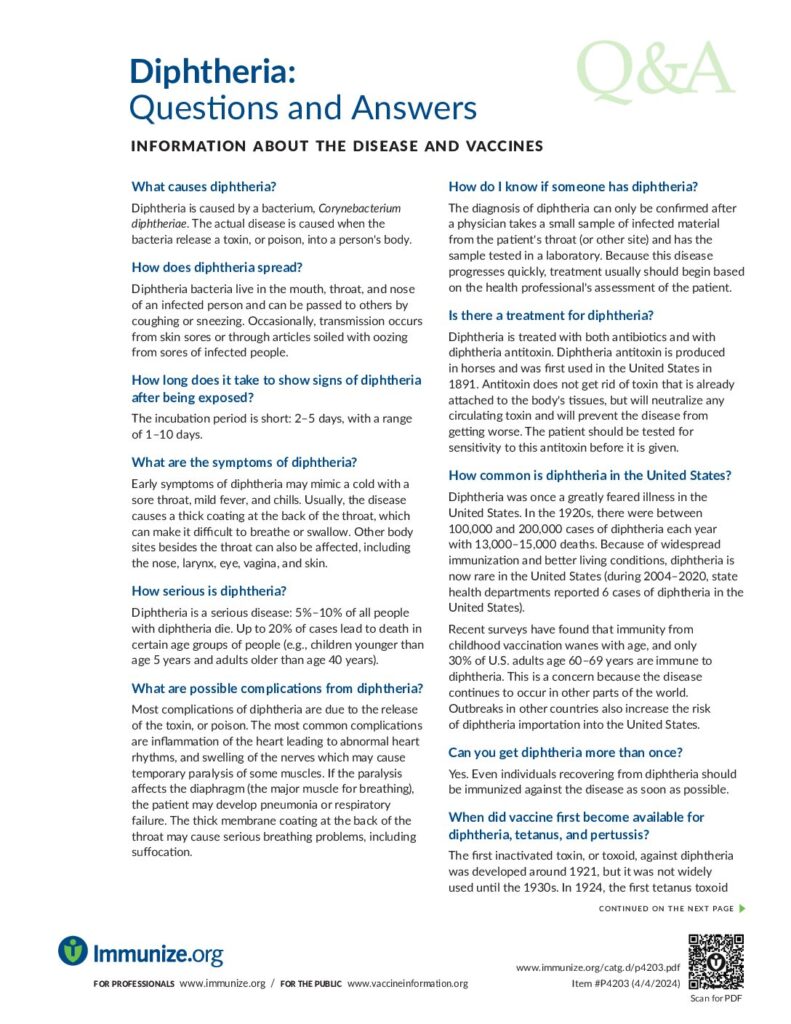
Diphtheria: Questions and Answers
Diphtheria disease and vaccine information from Immunize.org.
Partner Resources
General
Find fact sheets, resources, multimedia, and more for parents and children from CDC.
Five doses of a DTaP shot for children and one Tdap shot for preteens are recommended by doctors as the best way to protect against diphtheria. Learn more about diphtheria and vaccines from CDC. A Spanish-language version is also available.

Questions and answers about diphtheria, tetanus, pertussis, and vaccines from the Vaccine Education Center at the Children’s Hospital of Philadelphia.

Learn about diphtheria and the vaccines used to prevent it in the United States.
Travel
Information for travelers about vaccines they may need, including Tdap (tetanus, diphtheria, pertussis).
 PERSONAL TESTIMONIES
 Lois
A public health nurse discusses the death of her young cousin from diphtheria in 1961, and the subsequent serious illness she and family members experienced.
Read more.
DTaP Vaccine—Vaccines and Your Baby
The DTaP vaccine is a combination of three vaccines in one. This vaccine prevents diphtheria, tetanus, and pertussis. The vaccine creates immunity to the toxins created by the bacteria that cause these diseases.
People of any age can feel a bit anxious about getting a shot. Some may be so anxious that they avoid vaccination…even when they know it’s important. Learn more about simple ways to help any child or adult feel better and more confident when getting vaccinated.