|
Questions & Answers
Click
here for a
fully formatted PDF version of these Qs & As.
When did mumps vaccine become available in the
U.S.?
The currently used mumps vaccine was licensed in 1967.
What kind of vaccine is it?
The mumps vaccine is made from a live attenuated (weakened) virus. In the United
States, it is recommended that it be given as part of the MMR vaccine, which
protects against measles, mumps, and rubella (German measles) or the MMRV
vaccine (MMR plus varicella [chickenpox] vaccine) when age-appropriate (licensed
for use only from age 12 months through age 12 years).
How is this vaccine given?
This vaccine is given by subcutaneous injection, meaning that the vaccine is
deposited just under the skin and not deep into the muscle.
Who should get this vaccine?
All children and some adults should have documentation of 2 doses of a
mumps-containing vaccine. In the United States, mumps vaccine is commonly given
as part of the combination vaccines MMR or, when age appropriate, MMRV. Adults
born in 1957 or later without evidence of immunity (i.e., physician-diagnosed
disease, laboratory evidence of immunity, or confirmation of disease) should
receive at least 1 dose of vaccine; they should receive a second dose if they
are at high risk of exposure to mumps (e.g., healthcare personnel, international
travelers, college students). Unvaccinated healthcare personnel born before
1957, who do not have evidence of immunity, should also receive two doses of
MMR.
At what age should my baby get his first mumps
shot?
The first dose of MMR or MMRV should be given on or after the first birthday;
the recommended range is from age 12-15 months. A dose given before 12 months of
age may not be counted, so the child's medical appointment should be scheduled
with this in mind.
When should my child get his second MMR/MMRV
shot?
The second dose of MMR is usually given when the child is 4-6 years old, or
before he or she enters kindergarten or first grade. However, the second dose of
MMR can be given anytime as long as it is at least four weeks after the first
dose. MMRV can only be given through age 12 years and should be separated from a
previous dose of varicella-containing vaccine by 12 weeks.
Who recommends this vaccine?
The Centers for Disease Control and Prevention (CDC), the American Academy of
Pediatrics (AAP), and the American Academy of Family Physicians (AAFP) have all
recommended this vaccine.
How safe is this vaccine?
Mumps is a very safe vaccine. Most side effects are mild and related to the
measles or rubella components of the MMR vaccine (fever, rash, temporary joint
symptoms).
What side effects have been reported with MMR
vaccine?
Fever is the most common side effect, occurring in 5%-15% of vaccine recipients.
About 5% of persons develop a mild rash. When they occur, fever and rash appear
7-12 days after vaccination. About 25% of adult women receiving MMR vaccine
develop temporary joint pain, although this symptom is related to the rubella
component of the combined vaccine. Joint pain only occurs in women who are not
immune to rubella at the time of vaccination. MMR vaccine may cause
thrombocytopenia (low platelet count) at the rate of about 1 case per
30,000-40,000 vaccinated people. Cases are almost always temporary and benign.
More severe reactions, including allergic
reactions, are rare. About one person per million develops inflammation of the
brain, which is probably caused by the measles vaccine virus.
How effective is this vaccine?
Approximately 80% of individuals become immune to mumps after a single dose of
vaccine. The second dose of MMR vaccine is intended to produce immunity in the
20% of persons who did not respond to the first dose. This also ensures that the
individual gets another chance to become immune to measles and rubella.
Who should NOT receive mumps vaccine?
Anyone who experiences a severe allergic reaction (e.g., hives, swelling of the
mouth or throat, difficulty breathing) following the first dose of MMR should
not receive a second dose. Anyone knowing they are allergic to an MMR component
(gelatin, neomycin) should not receive this vaccine.
Pregnant women should not receive the MMR
vaccine, and pregnancy should be avoided for four weeks following vaccination
with MMR. While there is no evidence that the mumps vaccine causes fetal damage,
women are advised not to receive the MMR vaccine during pregnancy as a safety
precaution based on the theoretical possibility of a live vaccine causing
disease.
Severely immunocompromised persons should not be
given MMR vaccine. This includes persons with a variety of conditions, including
congenital immunodeficiency, AIDS, leukemia, lymphoma, generalized malignancy,
or those undergoing immunosuppressive therapy.
Can individuals with egg allergy receive MMR
vaccine?
In the past it was believed that persons who were allergic to eggs would be at
risk of an allergic reaction from the vaccine because the vaccine is grown in
tissue from chick embryos. However, recent studies have shown that this is not
the case. Therefore, MMR may be given to egg-allergic individuals without prior
testing or use of special precautions.
How do I know if I'm immune to mumps?
Persons are generally considered to be immune to mumps if they were born before
1957, have laboratory evidence of mumps immunity, have documentation from their
health professional of previous mumps disease, or have received appropriate
mumps vaccination.
Can the vaccine cause mumps?
No. This vaccine is live, but attenuated. It can cause symptoms like fever but
cannot cause mumps.
Does the MMR vaccine cause autism?
There is no scientific evidence that measles, MMR, or any other vaccine causes
autism. The question about a possible link between MMR vaccine and autism has
been extensively reviewed by independent groups of experts in the U.S. including
the National Academy of Sciences' Institute of Medicine. These reviews have
concluded that the available epidemiologic evidence does not support a causal
link between MMR vaccine and autism.
The MMR-autism theory had its origins in research
by Andrew Wakefield and colleagues in England. They suggested that inflammatory
bowel disease (IBD) is linked to persistent viral infection. In 1993, Wakefield
and colleagues reported isolating measles virus in the intestinal tissue of
persons with IBD. The validity of this finding was later called into question
when it could not be reproduced by other researchers. In addition, the findings
were further discredited when an investigation found that Wakefield did not
disclose he was being funded for his research by lawyers seeking evidence to use
against vaccine manufacturers. The studies that suggest a cause-and-effect
relationship exists between MMR vaccine and autism have received a lot of
attention by the media. However, these studies have significant weaknesses and
are far outweighed by many population studies that have consistently failed to
show a causal relationship between MMR vaccine and autism.
For a summary of the issues on this topic, please
read "Vaccines and Autism," by Paul A. Offit, MD, Director, Vaccine Education
Center, Children's Hospital of Philadelphia. This discussion can be accessed
online at
www.chop.edu/consumer/jsp/division/generic.jsp?id=84662.
"MMR vaccine does not cause autism. Examine the evidence!” lists all the major
studies related to this issue with links to
journal article abstracts:
www.immunize.org/catg.d/p4026.pdf
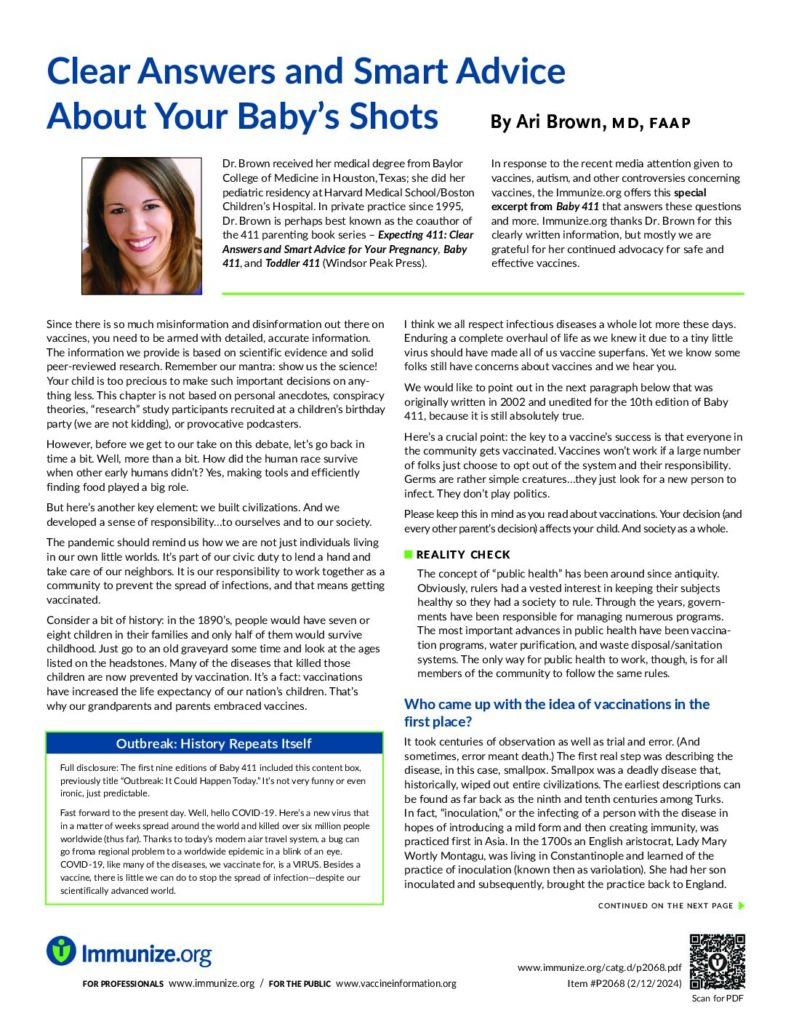
Dr. Ari Brown has written a good piece for parents questioning the safety of
vaccines. To access "Clear Answers & Smart Advice About Your Baby’s Shots," go
to: www.immunize.org/catg.d/p2068.pdf
For more information, visit CDC's web page about
MMR vaccine safety at
www.cdc.gov/vaccinesafety/updates/mmr_vaccine.htm
Questions and answers
about mumps disease
Technically reviewed by the Centers for
Disease Control and Prevention, November 2009
Back to top
Back to mumps index page
Back to vaccineinformation.org homepage
|