

Overview
- Whooping cough (also called pertussis) is a serious disease caused by bacteria. It is called whooping cough because of the “whoop” heard when a person who has it gasps for breath between coughing fits.
- Whooping cough is spread through the air by coughing and sneezing. It is very contagious.
- Whooping cough can trigger coughing so severe that it results in vomiting and broken ribs. The cough can last for weeks or months, even when the person is no longer contagious. More than half of babies younger than one year old who get whooping cough are hospitalized because the infection can cause them to stop breathing. Young babies are the most likely to die from whooping cough or have complications such as seizures and brain damage.
- Whooping cough is most dangerous for babies, but anyone can become seriously ill from it.
- You can protect yourself by getting vaccinated. The best way to protect newborn babies is to vaccinate mothers during each pregnancy.
- International Travel: Pertussis bacteria exist worldwide. International travelers should be up to date with this routine vaccine.
Whooping Cough (Pertussis) Vaccine Schedule
All infants, children, and teens should be vaccinated against whooping cough. The vaccine for infants and children is combined with diphtheria and tetanus vaccine as DTaP. The schedule is 4 doses at 2, 4, 6 and 15–18 months of age. A DTaP booster dose is recommended at 4–6 years. The adolescent and adult vaccine is called Tdap. A dose of Tdap is recommended at 11–12 years of age. A dose of Tdap is needed during the third trimester of each pregnancy to allow the mother’s immune system to give pertussis immunity to the newborn infant. Adults who have not had Tdap should get a dose of Tdap to protect themselves, then a Tdap or Td booster every 10 years thereafter.
RESOURCES
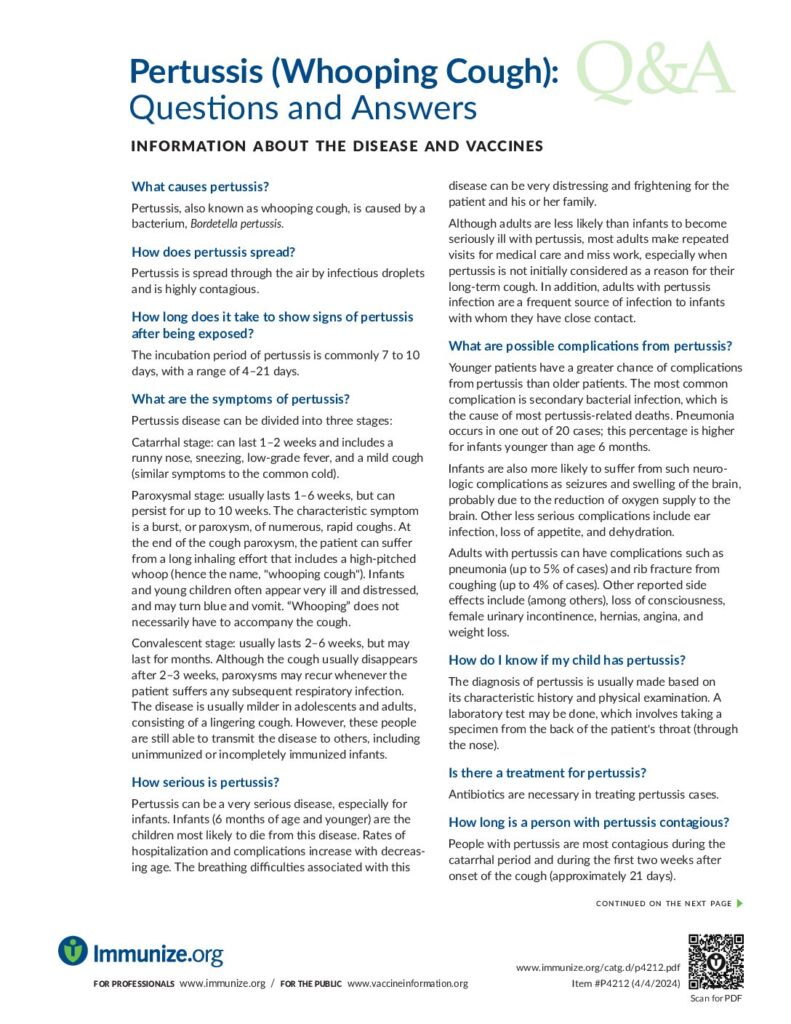
Pertussis (Whooping Cough): Questions and Answers
A Q&A about whooping cough and vaccines, from Immunize.org.
Partner Resources
General
Find fact sheets, resources, multimedia, and more for parents and children from CDC.
Five doses of a DTaP shot for children and one Tdap shot for preteens are recommended by doctors as the best way to protect against whooping cough (pertussis). Learn more about whooping cough (pertussis) and vaccines from CDC. A Spanish-language version is also available.

Questions and answers about diphtheria, tetanus, pertussis, and vaccines from the Vaccine Education Center at the Children’s Hospital of Philadelphia.

Basic information about pertussis and vaccines, from the American Academy of Pediatrics

Information about pertussis vaccine and the importance of vaccinating children.
Travel
Information for travelers about vaccines they may need, including Tdap (tetanus, diphtheria, pertussis).
 PERSONAL TESTIMONIES
 Colin Durkin
Pamela and Kevin Durkin write about the tragic death of their infant, Colin, due to whooping cough (pertussis).
Read more.Colin Enderlein
Mary-Clayton Enderlein recounts the suffering of her newborn son Colin endured during his life-and-death struggle with whooping cough (pertussis).
Read more.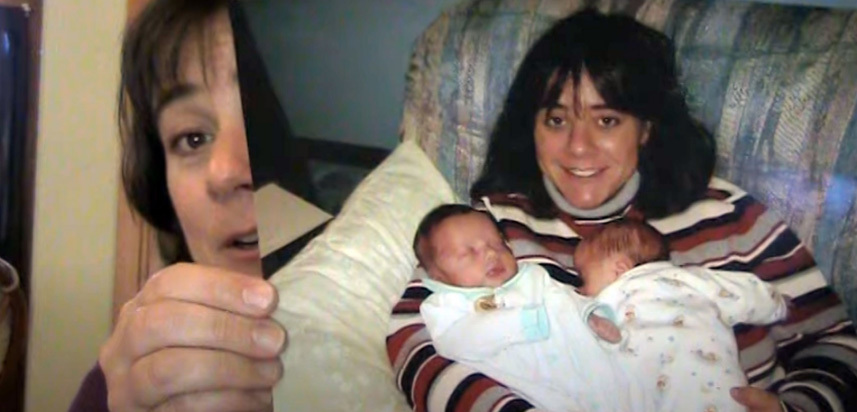
Pertussis Vaccination? My Story
Whooping cough is a dangerous disease that can be catastrophic for infants. This is one mother’s story of the tragic loss of her infant son Abe from whooping cough (pertussis) and her heart wrenching message to the community.
People of any age can feel a bit anxious about getting a shot. Some may be so anxious that they avoid vaccination…even when they know it’s important. Learn more about simple ways to help any child or adult feel better and more confident when getting vaccinated.